How to Clean a Blackstone Griddle the Right Way
If you spend any time in Blackstone Facebook groups or outdoor cooking forums, you’ll see the same complaints over and over. Rust on the griddle surface. Flaking seasoning. Eggs coming out with mysterious brown coloring that has nothing to do with the heat. Food sticking to a surface that’s supposed to be non-stick.
Almost all of it comes down to two things: the way the griddle was seasoned when it was new, and the way it gets cleaned after every cook. Get those two things right and most of the problems people report simply don’t happen.
I cook on my Blackstone just about every week. I’ve gone several weeks without using it, forgotten to cover it, and had the surface rained on. No rust, no flaking, no issues. This is the method that keeps it that way.
Why Most People Have Problems with Their Blackstone
The Blackstone has a cold-rolled steel cooking surface. Unlike stainless steel or cast aluminum, cold-rolled steel is reactive, which means it will rust if you don’t maintain it properly. It also needs to be seasoned, the same way a cast iron pan needs to be seasoned, to build up a protective layer of polymerized oil that gives you a non-stick surface and prevents rust.
Most problems trace back to one of three causes.
The first is a bad initial seasoning. If you didn’t get the seasoning right when the griddle was new, the foundation is weak and everything else suffers. More on this below.
The second is using too much oil when cleaning. A lot of people think more oil means more protection. What it actually means is a thick, gummy, rancid layer building up on the surface that eventually flakes off into your food.
The third is using soap or leaving water sitting on the surface. Dish soap strips the seasoning. Water left on the surface causes rust. Neither one should ever touch your griddle.
First: Get the Initial Seasoning Right
If you’re having ongoing issues with your griddle, there’s a good chance the initial seasoning is the root cause. A properly seasoned griddle is the foundation that makes everything else work.
I seasoned my griddle with flaxseed oil when I first bought it and have not had to re-season since. Flaxseed oil has a very low smoke point and polymerizes into an extremely hard, durable coating that bonds well to the steel. It takes more coats and more time than other oils but the result is noticeably better.
The process for initial seasoning:
Heat the griddle on high until it starts to smoke and discolor, which burns off any factory coating or residue. Let it cool slightly. Apply an extremely thin coat of flaxseed oil with a paper towel. You want barely visible, not a pooling coat. Heat the griddle back up until it stops smoking, then let it cool. Repeat this process five to six times. Each thin coat builds on the last and the cumulative result is a hard, dark, well-bonded seasoning layer.
The most common mistake in seasoning is using too much oil at once. A thick coat of oil doesn’t polymerize properly. It stays gummy, collects debris, and eventually flakes. Thin coats, repeated multiple times, are the way to do it.
After Every Cook: The Cleaning Routine
This is the process I use after every single cook. It takes about five minutes and keeps the griddle in good shape indefinitely.
What you need:
- Metal griddle scraper
- Squirt bottle filled with room temperature water
- Squirt bottle filled with canola or vegetable oil
- Three paper towels
The process:
While the griddle is still hot from cooking, scrape the surface with the metal scraper to remove any food debris. Work from back to front, pushing everything into the grease trap.
Squirt water onto the hot surface. The water will steam and sizzle, which helps loosen anything that’s stuck. Scrape again immediately while it’s steaming. Repeat this once more.
Fold a paper towel in half three times to create a small, thick pad. Squirt a little more water on the surface and place the folded paper towel under the scraper. Push it across the entire surface to wipe up the remaining water and loosened debris. Repeat with the second paper towel until the surface looks clean.
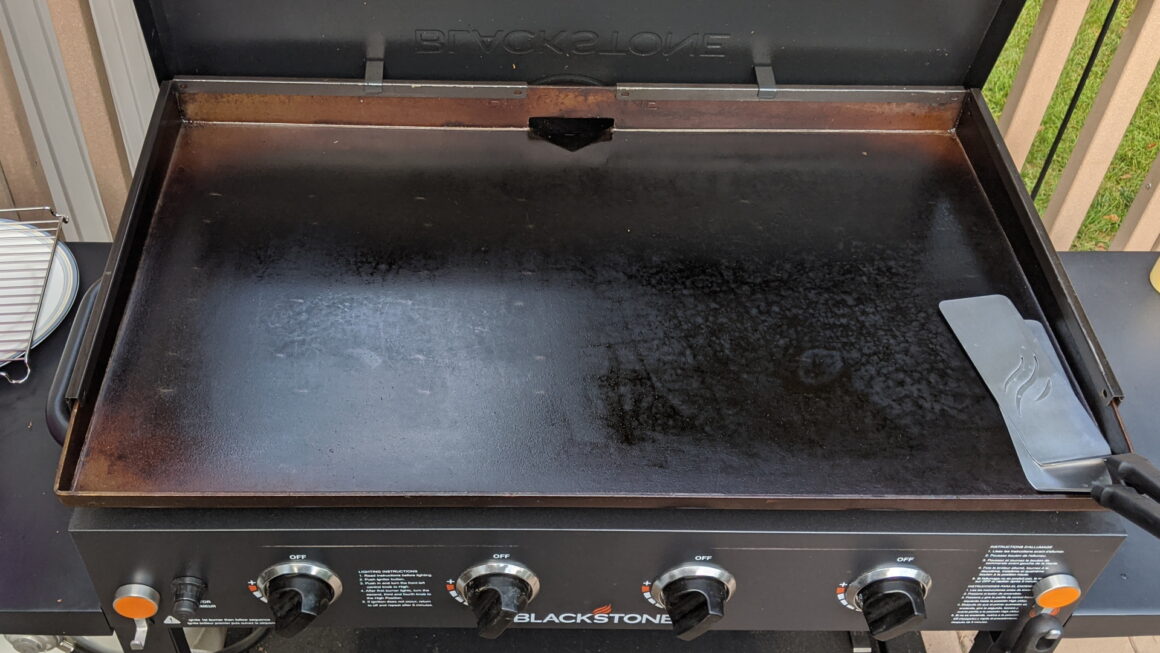
Squirt a thin coat of canola oil onto the surface. Take the third paper towel, fold it the same way, and use the scraper to wipe the oil across the entire surface in an even coat. You want a thin protective layer, not a pool of oil. If it looks wet or shiny you have too much.
Turn off the griddle and let it cool. Cover it once it’s fully cooled.
That’s the whole routine. Five minutes, three paper towels, two squirt bottles, one scraper.
What NOT to Do
Never use dish soap. Soap strips the seasoning and you’ll be starting over. Water is all you need.
Never use too much oil. A thin coat is protective. A thick coat becomes gummy and rancid and eventually flakes off into your food. Less is more every single time.
Never leave water sitting on the surface. The water you use during cleaning is fine because it evaporates quickly on a hot surface. Water sitting on a cool or cold griddle will rust it. Always make sure the surface is fully dry before you cover it.
Never use steel wool or abrasive pads for routine cleaning. These scratch the surface and damage the seasoning. The scraper and water method handles everything a normal cook leaves behind.
Never put a cold griddle cover on a hot griddle. Let it cool first. Trapping heat and moisture under a cover is a recipe for rust.
How to Remove Rust
If you’ve got rust on your griddle surface, it’s not the end of the world. It’s fixable, and it’s a good opportunity to re-season properly.
Heat the griddle on high. Use a metal scraper to scrape off as much of the rust as possible while it’s hot. Squirt water on the surface and scrape again, repeating until the rust is gone. For stubborn rust, a pumice cleaning stone designed for flat top griddles works well and won’t damage the surface the way steel wool does.
Once the rust is removed and the surface is clean and dry, go through the full initial seasoning process again. Five or six thin coats of flaxseed oil, heated and cooled between each coat. It’s a couple hours of work but the griddle will come out better than it was before.
Long Term Care
A well-maintained Blackstone should last for years without any significant issues. A few habits make a big difference over the long run.
Cook fatty foods on a new or freshly re-seasoned griddle before you try anything delicate. Bacon, sausage, and burgers add to the seasoning layer naturally while they cook. Eggs and fish on a brand new or freshly seasoned surface is asking for trouble.
Cover the griddle when you’re not using it. Moisture is the enemy of a steel cooking surface. A good cover keeps rain, dew, and humidity off the surface between cooks.
If you’re not going to use the griddle for an extended period, give it a slightly heavier coat of oil than usual before you cover it. Not gummy thick, just a more generous thin coat. This gives extra protection against humidity over time.
Check the surface periodically if the griddle has been sitting unused. If you see any spots that look dull, dry, or slightly rusty, heat the griddle up, scrape and wipe the surface clean, and apply a fresh thin coat of oil. Catching small issues early prevents them from becoming big ones.
Squirt Bottle Setup
One practical note: the squirt bottle setup makes this whole routine significantly easier and is worth doing before you even cook on the griddle for the first time.
Get two dedicated squirt bottles. Label one “water” and one “oil.” Keep them next to the griddle. Having them right there means you don’t have to go looking for anything mid-clean while the surface is still hot, and you get much better control over how much water and oil you’re applying than you would pouring from a bottle.
I use canola oil in the oil bottle. It has a high smoke point, a neutral flavor, and it’s inexpensive. Any neutral high-smoke-point oil works fine.
The Bottom Line
A Blackstone griddle is a fantastic piece of cooking equipment and it’s not difficult to maintain. The people who have rust and flaking and sticking problems are almost always the people who are over-oiling, using soap, or starting on a weak initial seasoning. Fix the foundation, clean it the same way after every cook, and the griddle takes care of itself.
If you’re looking for recipes to cook on your newly clean griddle, check out the Corned Beef Hash, the Pork Belly Okonomiyaki, and the Korean Kalbi Short Ribs for some of my favorite Blackstone recipes.
How to Clean a Blackstone Griddle the Right Way
Equipment
- Metal griddle scraper
Materials
- 3 Paper towels
- 1 Squirt bottle filled with room temperature water
- 1 Squirt bottle filled with canola or vegetable oil
Instructions
- While the griddle is still hot from cooking, scrape the surface with the metal scraper to remove any food debris. Work from back to front, pushing everything into the grease trap.
- Squirt water onto the hot surface. The water will steam and sizzle, which helps loosen anything that’s stuck. Scrape again immediately while it’s steaming. Repeat this once more.
- Fold a paper towel in half three times to create a small, thick pad. Squirt a little more water on the surface and place the folded paper towel under the scraper. Push it across the entire surface to wipe up the remaining water and loosened debris. Repeat with the second paper towel until the surface looks clean.
- Squirt a thin coat of canola oil onto the surface. Take the third paper towel, fold it the same way, and use the scraper to wipe the oil across the entire surface in an even coat. You want a thin protective layer, not a pool of oil. If it looks wet or shiny you have too much.
- Turn off the griddle and let it cool. Cover it once it’s fully cooled.