Let’s get one thing straight before we get into this recipe: not all clam chowder is the same.
If you grew up in Rhode Island or Southeastern Massachusetts, you already know this. There’s New England clam chowder, the thick, creamy, white stuff that the rest of the country thinks of when they hear “clam chowder.” And then there’s Rhode Island clam chowder, which is a completely different animal: a clear, broth-based chowder made with quahogs, potatoes, and salt pork, no cream in sight. It’s its own tradition, and anyone who grew up with it will tell you it deserves just as much respect as the creamy version.
This recipe is the New England style: rich, creamy, and loaded with clam and potato. It’s what I grew up eating at places like Aunt Carrie’s down at the beach, and what I still make a point to stop for at Iggy’s when I get back to Rhode Island. It’s also one of the best things you can make on a cold fall afternoon when the outdoor cooking season is winding down and you need something that’ll warm you up from the inside out.
One of the best versions I’ve ever had was served in a small sourdough bread bowl on the pier in San Francisco, proof that while this chowder is a New England institution, it’s loved everywhere.
Rhode Island vs. New England vs. Manhattan Chowder: What’s the Difference?
Since people ask this all the time, it’s worth laying out clearly.
New England Clam Chowder (this recipe) is thick and creamy, made with a milk or heavy cream base, potatoes, bacon or salt pork, and chopped clams. It’s white, rich, and hearty. This is the version you’ll find in bread bowls in San Francisco, on menus across the country, and in the can at the grocery store. It’s the most widely known style and the one most people picture when they hear the word chowder.
Rhode Island Clear Chowder is made with a clear broth, no milk, no cream. The base is the clam liquor itself, with potatoes, onion, and salt pork. It’s lighter, more intensely clammy, and frankly underappreciated outside of New England. If you’ve only ever had the creamy version, Rhode Island clear chowder is worth seeking out. It’s the style that was served by the thousands at Rocky Point Park’s famous Shore Dinner Hall, and it’s what you’ll find alongside a bag of clam cakes at any proper Rhode Island clam shack.
Manhattan Clam Chowder takes a completely different direction: it’s tomato-based with a red broth, vegetables like celery and carrots, and chopped clams. It’s lighter than New England style and has a completely different flavor profile. New Englanders have strong opinions about it, but it has a loyal following of its own and is worth trying if you’ve never had it.
All three are legitimate. They’re just very different soups that happen to share a name. This post covers the New England style. If you want the clear Rhode Island version, keep an eye out for that one coming soon.
Starting with Fresh Clams: It Matters
This recipe starts with fresh quahogs, the large, hard-shell clams native to the Northeast. Topnecks or Cherrystones work well here. You’re steaming them open first, which serves two purposes: it cooks the clam meat, and it creates your clam broth, which becomes the backbone of the chowder.
That broth is everything. The flavor you get from steaming fresh clams and using their liquor as your base is completely different from opening a can of clam juice. If you can get fresh clams, use them. The difference is not subtle.
A note on the broth: quahogs can carry sand. After you steam them open and remove the clams, let the broth sit for a few minutes and allow any sand to settle to the bottom. Then ladle or carefully pour the broth off the top, leaving the sandy sediment behind. Adding gritty chowder to the pot is the one mistake that can ruin an otherwise perfect bowl.
The Bacon Question
Traditionally, New England chowder is made with salt pork rather than bacon. Salt pork is fattier and milder, and it melts into the background of the chowder in a way that bacon doesn’t.
That said, I use thick-cut bacon in this recipe and I’m not apologizing for it. The smokiness it adds plays really well with the clams, and it renders down into crispy bits that add texture throughout the bowl. If you want to go more traditional, swap the bacon for salt pork. Both work; it’s just a matter of preference.
Tips for the Best Chowder
Don’t rush the potatoes. Cook them until they’re genuinely tender, not just barely done. Slightly soft potatoes that absorb the broth are what you want. Firm, undercooked potato chunks in chowder are a disappointment.
Add the clams late. Clam meat toughens quickly if overcooked. Add it in at the end with the cream and let everything simmer gently together. You’re finishing the chowder, not recooking the clams.
The cornstarch slurry is optional but useful. If you like a thicker chowder, the kind that coats the back of a spoon, the optional cornstarch slurry at the end gets you there. If you prefer a thinner, brothier chowder, skip it.
Make it the day before. Like most chowders and soups, this one is noticeably better the next day. The flavors have time to meld and the potatoes thicken the broth naturally as it sits. If you’re making this for company, make it the day before and reheat gently before serving. If you’re making this for company, make it the day before and reheat gently before serving.
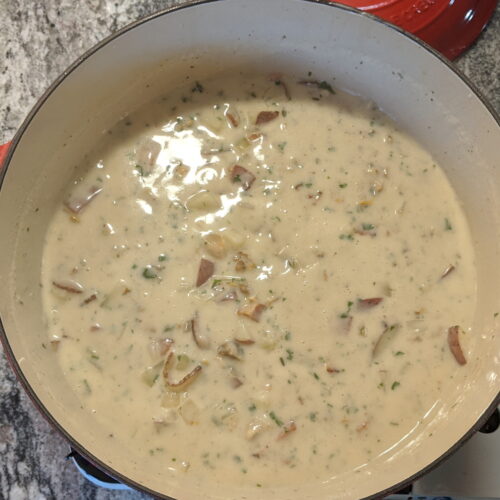
New England Clam Chowder
Ingredients
- 3-4 dozen Topneck, Cherrystone, or Quahog clams
- ¼ lb thick cut bacon cut into lardons
- 1 large yellow onion diced
- 2 tbsp all-purpose flour
- 1 lb red potatoes diced
- 1 bay leaf
- 1 tsp fresh thyme
- 1 cup heavy cream
- 2 tbsp fresh parsley minced
- 4 cups water
- salt and pepper to taste
Optional for thickening
- ¼ cup water
- 2-3 tbsp cornstarch
Instructions
- Steam the clams. Bring 4 cups of water to a boil in a large stockpot with a lid. Add the clams, put the lid on, and start checking after 5 minutes. Remove clams as they open and transfer them to a bowl. Continue checking until all clams have opened, any that haven't opened after 15-20 minutes should be discarded.
- Reserve the broth. Let the clam broth in the pot sit for a few minutes to allow any sand to settle. Carefully ladle the broth off the top into a bowl or pitcher, leaving the sandy sediment behind. Set aside.
- Prepare the clams. Remove the clam meat from the shells. Use a knife to detach the muscle from the shell and add that in with the rest of the meat. Roughly chop the clam meat and set aside.
- Render the bacon. In a separate large stockpot, cook the bacon over medium heat until crispy. Don't drain the fat, you're cooking the onions in it.
- Cook the onions. Add the diced onion to the pot with the bacon and cook until soft and translucent, about 8-10 minutes.
- Build the base. Add the flour to the pot and stir until fully incorporated. Let it cook for 1-2 minutes to get rid of the raw flour taste. Slowly whisk in the reserved clam broth, stirring to prevent lumps.
- Add the potatoes. Add the thyme, bay leaf, and diced potatoes. Bring to a boil and cook for 15-20 minutes until the potatoes are completely tender.
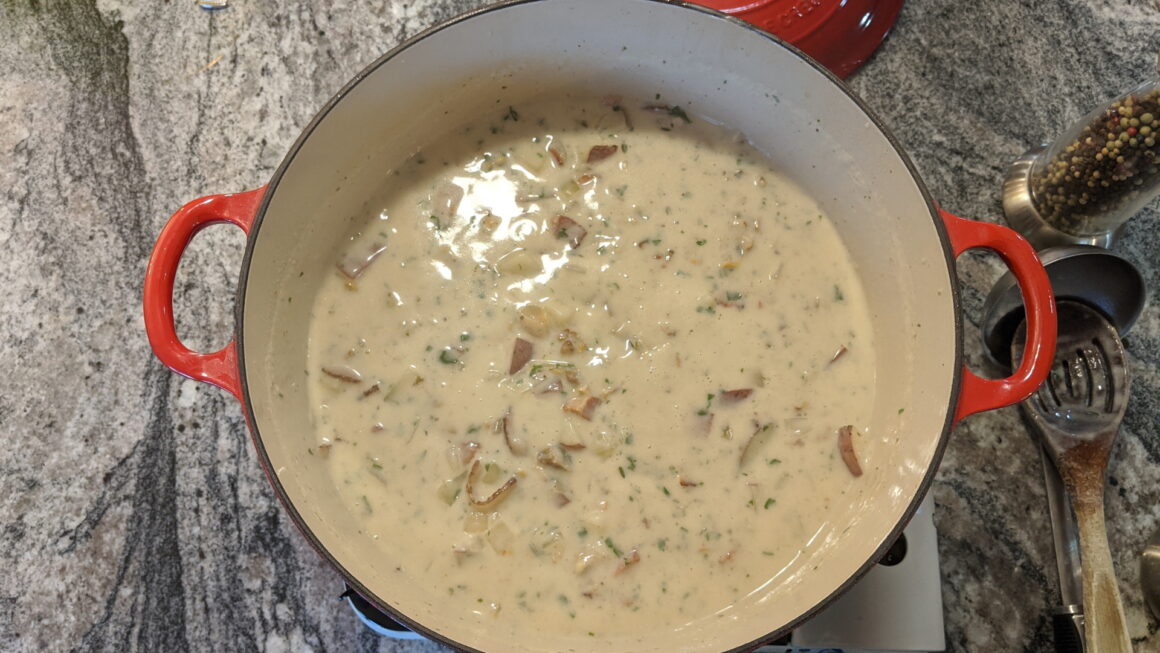
- Finish the chowder. Reduce the heat to a simmer and add the chopped clams, heavy cream, and minced parsley. Simmer gently for 30 minutes.
- Thicken if desired. If you want a thicker chowder, mix ¼ cup of cold water with 2-3 tablespoons of cornstarch to make a slurry. Stir it into the chowder and bring back to a brief boil to activate the starch. Adjust salt and pepper to taste.
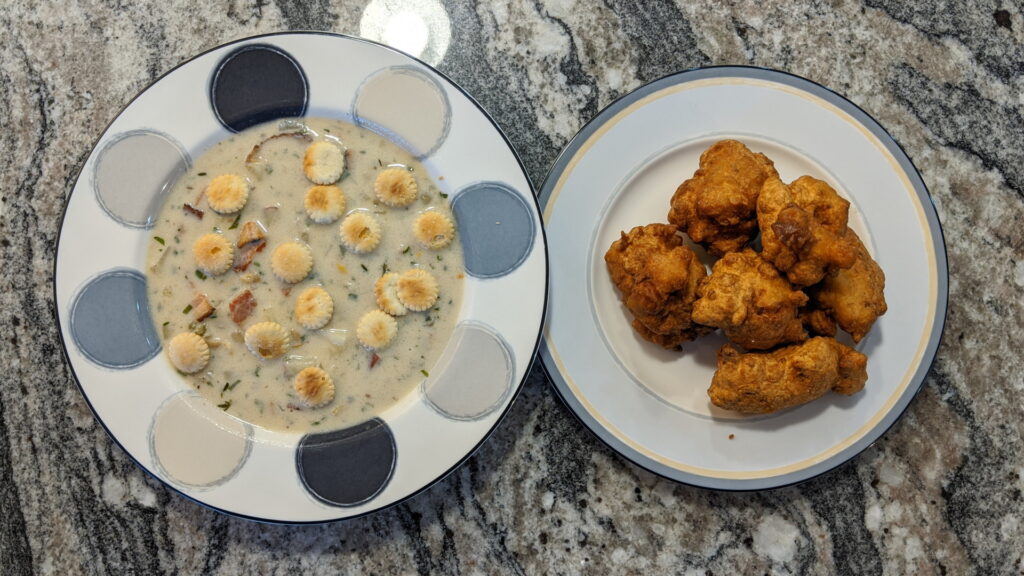
- Serve. Ladle into bowls and serve with oyster crackers, crusty bread, or, if you're doing this right, a side of clam cakes.
Video
Notes
What to Serve With New England Clam Chowder
- Clam cakes – if you grew up in Rhode Island you already know these are non-negotiable alongside a bowl of chowder. Check out my Rhode Island Clam Cakes recipe to make the full spread.
- Oyster crackers – the classic. Float a handful on top right before serving.
- Sourdough bread bowl – the San Francisco treatment. Hollow out a small sourdough loaf and pour the chowder right in.
- Crusty French bread – for dunking. No further explanation needed.
Clam Cakes and Chowder: A Rhode Island Institution
If you’re from Rhode Island, you already know that chowder without clam cakes isn’t really the full experience. The two go together the way peanut butter goes with jelly: technically separate things, but best enjoyed together.
Clam cakes are a Rhode Island original. You won’t find them on menus anywhere else in the country, and if you try to explain them to someone from out of state you’ll get a lot of skeptical looks. But anyone who grew up here knows that a paper cup of clam cakes alongside a bowl of chowder is one of the great simple pleasures in life.
The places that made this combination legendary are deeply tied to Rhode Island’s identity. Aunt Carrie’s down in Narragansett has been serving clam cakes and chowder since 1920, one of the oldest seafood restaurants in New England and the real deal in every sense. Iggy’s in Warwick and Narragansett is another institution, with lines out the door on summer weekends full of people who’ve been coming since they were kids. Chelo’s is a Rhode Island staple that has been serving comfort food and seafood for generations and is still going strong, a reliable local favorite that’s been part of the Rhode Island dining scene for as long as most people can remember.
And then there’s Rocky Point Park. If you grew up in Rhode Island in the 70s, 80s, or early 90s, Rocky Point was the place. The amusement park on the shores of Narragansett Bay ran for over a century before finally closing in 1995, but what people remember most isn’t the rides. It’s the Shore Dinner Hall. One of the largest shore dinner halls in New England, serving thousands of people at a time, and the meal always included Rhode Island clear chowder and clam cakes. For generations of Rhode Islanders, Rocky Point clam cakes are the gold standard, the taste they’re trying to recreate every time they make them at home.
This chowder pairs perfectly with a batch of homemade clam cakes. Check out my Rhode Island Clam Cakes recipe, made the right way, the way Rocky Point used to make them.
Whether you’re a Rhode Islander who grew up on this stuff or you’ve never made chowder from scratch before, this recipe is the real deal. Fresh clams, real broth, thick and creamy: the kind of bowl that makes you wish you’d made a bigger pot.