I had never made sauerkraut from scratch before deciding to do it for the NYC pushcart hot dog video. I always just grabbed a jar off the shelf and called it a day. Once you make it yourself, though, you realize how simple it actually is — and how much better the real fermented stuff tastes compared to the vinegar-brined version they sell at most grocery stores.
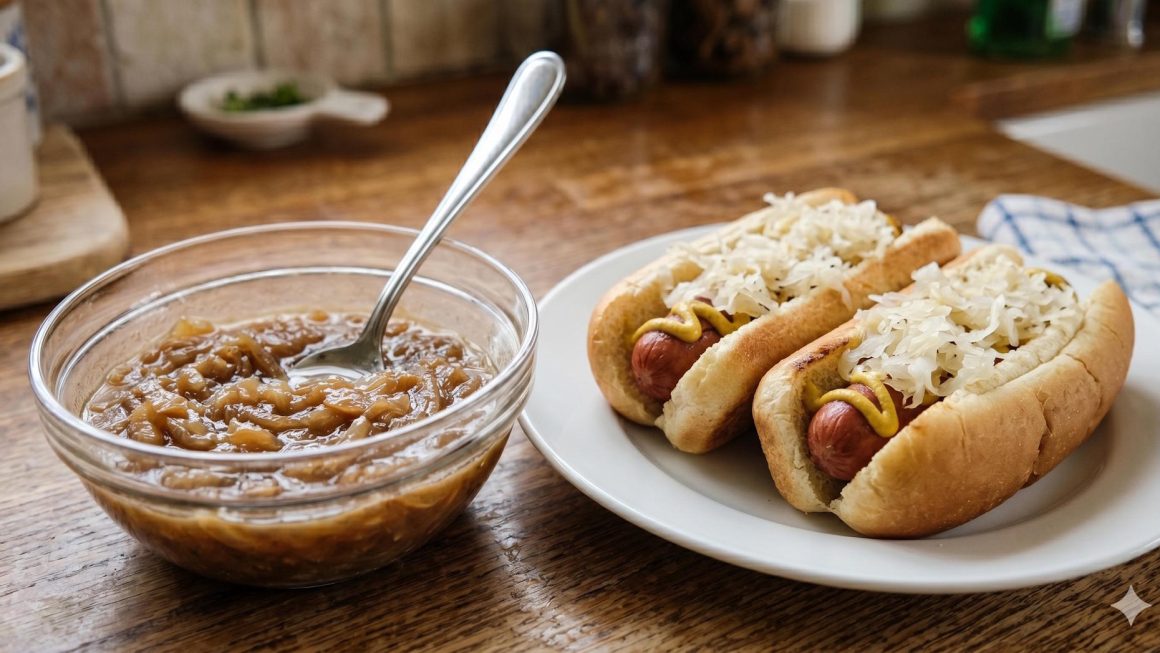
This recipe is part of my NYC Pushcart Style Hot Dogs post, where I put together the full dirty water dog experience with this sauerkraut and a homemade onion sauce. Check out the full video there if you want to see the whole process from start to finish.
What Is Sauerkraut, Actually?
Sauerkraut is fermented cabbage. That is it. You shred the cabbage, mix it with salt, and let naturally occurring bacteria do all the work. The salt draws moisture out of the cabbage, creates a brine, and the lactobacillus bacteria already living on the cabbage ferments the sugars in that brine into lactic acid.
That lactic acid is what gives sauerkraut its tangy flavor and also acts as a preservative. No vinegar needed. No canning equipment. Just cabbage, salt, and time.
Two Ingredients, One Rule
The only real rule in sauerkraut is the salt ratio. You want 2% of the cabbage weight in salt. That sounds technical but it is just basic math. Weigh your cabbage after coring it, multiply by 0.02, and that is how much salt to use.
Too little salt and you risk bad bacteria taking over before the good stuff gets going. Too much and you slow fermentation down or stop it entirely. At 2%, you are in the sweet spot every time.
Use kosher salt. Avoid table salt with iodine — the iodine can inhibit fermentation.
Equipment You Need
Nothing fancy. You need:
- A large bowl for mixing
- A kitchen scale (for the salt ratio — do not skip this)
- A mandolin or sharp knife for slicing
- A 1 quart wide mouth mason jar
- A small 4 oz jelly jar that fits inside the mason jar
- A label and a marker
The Fermentation Process
After you pack the cabbage into the jar, you need to keep it submerged under the brine. This is critical. Any cabbage poking above the liquid is exposed to air, and that is where mold can grow. The small jelly jar sitting on top of the packed cabbage acts as a weight to keep everything pushed down.
Leave the lid on loose. Fermentation produces CO2 and if you seal the jar tight, pressure will build up. Loose is fine — you just want to keep dust and bugs out.
Room temperature is ideal, somewhere between 65 and 75 degrees F. It will take a little longer in a cooler room and a little faster in a warmer one.
After 5 days you will have a tangy, crunchy sauerkraut ready to go. After 2 weeks the flavor gets more complex and a little softer. At that point you can move it to the fridge to slow the fermentation way down.
A Note on the Brine
When you first pack the jar, give it a gentle press down every few hours for the first day or so to make sure the cabbage stays submerged as the brine level settles. If after 24 hours the brine has not risen above the cabbage, you can add a small amount of 2% salt water to top it off.
Homemade Sauerkraut
Equipment
- 1 Quart Mason Jar
- 1 4oz Mason Jelly Jar
- 1 Kitchen Scale
Ingredients
- 1 head green cabbage approximately 1200g after coring
- 24 g kosher salt 2% of cabbage weight
Instructions
- Start by breaking down the cabbage. Cut it into quarters and remove the core from each piece.
- Get your salt ratio right. Weigh the cored cabbage and calculate 2% of that weight. That is how much kosher salt you need.
- Slice it as thin as you can. Using a mandolin set to 1/8 inch, work through all the cabbage. A sharp knife works too, just take your time.
- Get the salt worked in evenly. Add the cabbage to a large bowl, sprinkle the salt over it in layers, and mix thoroughly.
- Work it with your hands. Squeeze and crush the cabbage to start breaking down the cell walls and releasing liquid.
- Give it time to release. Let it rest for 15 to 20 minutes, then crush again. Repeat 2 to 3 times over about an hour. You should see significant liquid pooling in the bowl.
- Pack the jar tight. Transfer the cabbage to a 1 quart wide mouth mason jar, pressing down firmly as you go. The liquid should rise up above the cabbage.
- Keep the cabbage submerged. Place a small 4 oz jelly jar on top of the packed cabbage inside the mason jar to act as a weight.
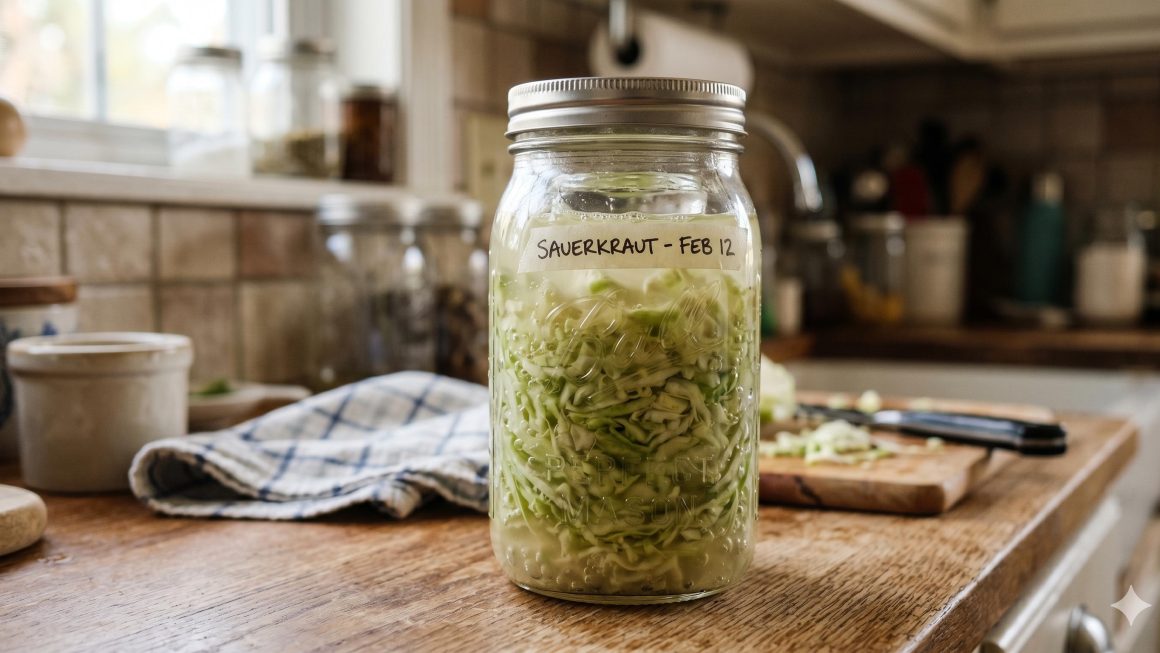
- Cover it loosely. Place the lid on the mason jar but do not seal it tight — fermentation gases need to escape. Label the jar with the date.
- Let it ferment at room temperature. Leave it at 65 to 75 degrees F for a minimum of 5 days before using.
- Move it to cold storage after 2 weeks. Transfer the jar to the refrigerator or any location that stays below 50 degrees F to slow fermentation down.